Chemical peels and microdermabrasion on dark skin
Darker skin can have a chemical peel or microdermabrasion. Superficial peels are the type most often used on skin of color, and of 473 superficial peels studied on skin types III to VI, 3.8% caused a side effect, all gone within 8 months. The real risk is a dark mark from irritation, so depth and preparation matter most.
Published · Written by Kay Woodson · Results vary.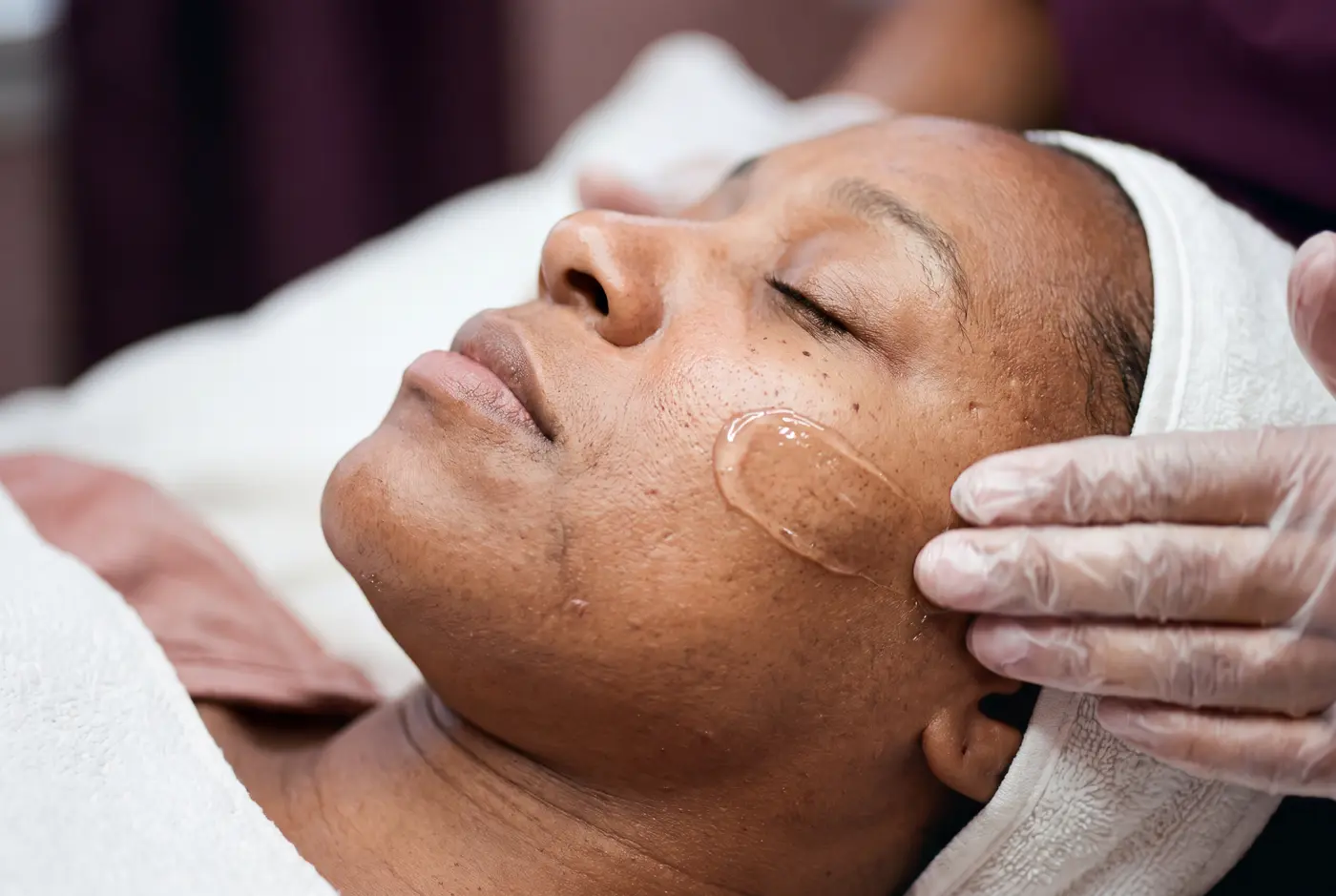
What the research says about darker skin
Most peel research was done on lighter skin. These are the studies and guidance that look at skin of color directly.
| Source | Who | What they found |
|---|---|---|
| Vemula et al., J Am Acad Dermatol, 2018 | 473 superficial peels, skin types III to VI, over 5 years | Side effects in 3.8%: crusting 2.3%, dark marks 1.9%, redness 1.9%. All cleared within 8 months. Fewer in winter. Type VI had about 5 times the odds |
| Grimes, Dermatologic Surgery, 1999 | 25 patients, skin types V and VI | Five salicylic acid peels at 20% and 30%, two weeks apart, after 2 weeks of hydroquinone. 88% improved moderately to significantly; 16% had minimal to mild side effects |
| Desai et al., J Clin Aesthet Dermatol, 2023 | Review of cosmetic procedures in skin of color | Superficial peels are considered safest. Glycolic acid 20% to 50% and salicylic acid 20% to 30% have a low side-effect profile for all skin tones |
| Salam et al., Br J Dermatol, 2013 | Review of peels in ethnic skin | Darker skin has a higher risk of pigment changes and abnormal scarring after peels, which the authors call potentially disfiguring |
| Skin of Color Society | Patient guidance | Superficial peels are the type most often used on skin of color; deeper peels can cause dark or light patches and scarring |
Pilot and single-center studies. Small numbers, so read them as encouraging, not as guarantees.
Peel or microdermabrasion: which is gentler?
No study has compared the two head to head on deep skin, so nobody can honestly say one is safer. They work differently. A peel uses acid to loosen the top layer. Microdermabrasion buffs it off with crystals or a diamond tip. The Skin of Color Society names both as procedures that can help post-inflammatory dark marks fade.
The AAD calls microdermabrasion safe for all skin colors, with one caveat that matters here: if your skin tends to form dark spots after acne or injuries, you may have a greater risk of new ones. That is the same skin that wants the treatment most, which is why the first session should be the gentlest.
Preparing darker skin, from a month out
- 1Two to four weeks before: ask about primingDesai and colleagues describe dermatologists using a prescription retinoid such as tretinoin for 2 to 4 weeks before a peel, to lower the risk of dark marks. In Grimes's study, patients used hydroquinone for 2 weeks first. Both are prescription products: follow your own provider's plan, never a guide's.
- 2One week before: a test spotThe same review describes applying a small amount of the peel along the jawline or under the chin one week before the full face. If that spot darkens, you have learned it cheaply.
- 3The day of: full disclosureTell your provider about isotretinoin in the past 6 months, any retinoid, recent waxing, and every time your skin has darkened after a pimple or a procedure. The AAD links recent isotretinoin to a higher risk with microdermabrasion.
- 4After: protect and waitSunscreen every day and hands off any flaking. The full day-by-day plan is in the peel aftercare guide.
Book your series in the cooler months
One detail from the 2018 study is easy to use on the Space Coast: side effects were less common in winter. With strong sun most of the year in Brevard, November through February is the natural window to start a series of peels, with enough time to finish before spring.
Questions to ask before anyone peels your skin
- How many clients with skin as deep as mine do you treat each month?
- Which acid, at what strength, and is it superficial?
- Will you do a test spot first?
- What do you do if my skin darkens afterward?
- Can we start with a lower strength and build up over the series?
The AAD advises people with skin of color to choose a peel provider with expertise in darker skin tones, because without it, pigment problems can last for good.
At-home peels are not the safe option
It is tempting to think a drugstore peel is gentler. The AAD warns that on darkly pigmented skin, even at-home peels and microdermabrasion can cause side effects, including lasting dark marks and light spots, and advises seeing a dermatologist before trying them. Lower strength on the label does not make up for the missing skin check.
What Karisma Esthetics offers
At Karisma, neither is sold on its own. Both live inside the Advanced Facial, $225 for about 90 minutes with Kay Woodson, and she picks one of them, or a gentler enzyme, for each visit. The peel is superficial only, chosen from the six she carries, lactic acid and Mandeliclear among them. Medium and deep peels, including strong TCA peels, are a dermatologist's work and are not offered.
On deeper skin, Kay's stated goal is to keep inflammation down and avoid injury the skin does not need. She sets microdermabrasion pressure client by client rather than using one setting for everyone. Bring the five questions above to your consultation anyway: a good provider welcomes them.
If your skin has never been exfoliated professionally, start with the $125 Signature Facial, which includes a consultation. The facial for melanin-rich skin in Melbourne, FL page compares the Signature and Advanced facials for deeper skin. Every price is on the pricing page.
Peels and microdermabrasion on dark skin
Which chemical peel is right for dark skin?
Superficial peels have the most supporting evidence on deep skin. Salicylic acid at 20% to 30% was studied in skin types V and VI, and a 2023 review calls glycolic and salicylic acid peels low in side effects for all skin tones. The right acid for you depends on your skin, so ask for a test spot.
Is microdermabrasion safe for dark skin?
The AAD calls it safe for all skin colors. If your skin forms dark spots easily after acne or injuries, the AAD says the risk of new spots is greater, so start gently.
Can a peel make my dark spots worse?
It can. Dark marks were one of the three most common side effects in the 2018 study, at 1.9% of peels, and all cleared within 8 months. Deeper peels carry more risk, according to the Skin of Color Society.
When is the safest time of year for a peel in Florida?
The 2018 study found fewer side effects in winter. In Brevard, a series that starts in November and ends by early spring keeps the healing weeks away from the strongest sun.
- Vemula S et al. Assessing the safety of superficial chemical peels in darker skin: a retrospective study. J Am Acad Dermatol. 2018;79(3):508-513, September 2018, read October 29, 2026
- Grimes PE. The safety and efficacy of salicylic acid chemical peels in darker racial-ethnic groups. Dermatol Surg. 1999;25(1):18-22, January 1999, read October 29, 2026
- Desai M, Gill J, Luke J. Cosmetic procedures in patients with skin of color. J Clin Aesthet Dermatol. 2023;16(3):37-40, 2023, read October 29, 2026
- Salam A, Dadzie OE, Galadari H. Chemical peeling in ethnic skin: an update. Br J Dermatol. 2013;169 Suppl 3:82-90, October 2013, read October 29, 2026
- Cosmetics and skin rejuvenation, Skin of Color Society, Chere Lucas, MD, no date shown, read October 29, 2026
- Post-Inflammatory Hyperpigmentation (PIH), Skin of Color Society, Chere Lucas, MD, no date shown, read October 29, 2026
- Chemical peels: FAQs, American Academy of Dermatology, read October 29, 2026
- Microdermabrasion: Overview, American Academy of Dermatology, read October 29, 2026
- Microdermabrasion: FAQs, American Academy of Dermatology, read October 29, 2026
- 10 tips for clearing acne in darker skin tones, American Academy of Dermatology, no date shown, read October 29, 2026